01 / Intro
Homestation
Home services.
Less uncertainty.
02 / Overview, data & insights
From the first idea.
To the finished job.
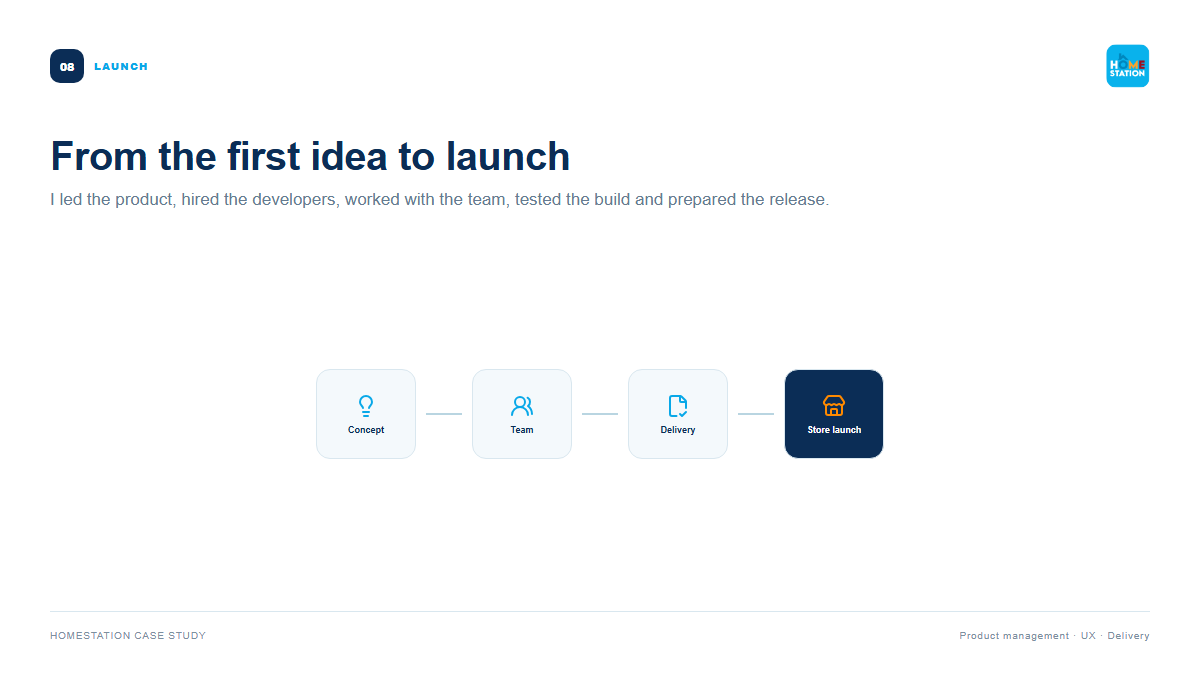
I led an Arabic home-services product from the first idea through research, team hiring, design, development and store launch.
- Product direction
- Team hiring
- UX and delivery
- Testing and iteration
- Store launch
Numbers & insights
Trust before booking
Customers needed profiles, ratings and clear price context before choosing a technician.
Shared job context
Technicians needed scope, timing and follow-up in the same place as the request.
Illustrative relative improvements against a baseline to be established before testing. These are measurement goals, not measured results.
Booking CR target
Confirmed bookings / users starting a service request. Clear pricing and a shorter request flow support completion.
Service discovery CTR target
Users opening a service / users viewing its card. Consistent icons and specific labels help users find the right service.
Repeat booking rate target
Customers booking again within 60 days / customers with a completed first job. Tracking, ratings and messaging support trust.
03 / Research & market
Understand the people.
Then shape the service.
I compared Serve App, Ajeer and Fanni as direct home-service competitors. Instagram was an indirect discovery channel where people searched related content to find providers. I reviewed discovery, trust signals, request details, price context and follow-up across these paths.
Serve App
Reviewed its service discovery, request setup and booking guidance.
Ajeer
Reviewed provider selection, trust signals and service detail.
Fanni
Reviewed service categories, job details and follow-up.
People searched related content and provider accounts to find home services outside a structured booking flow.
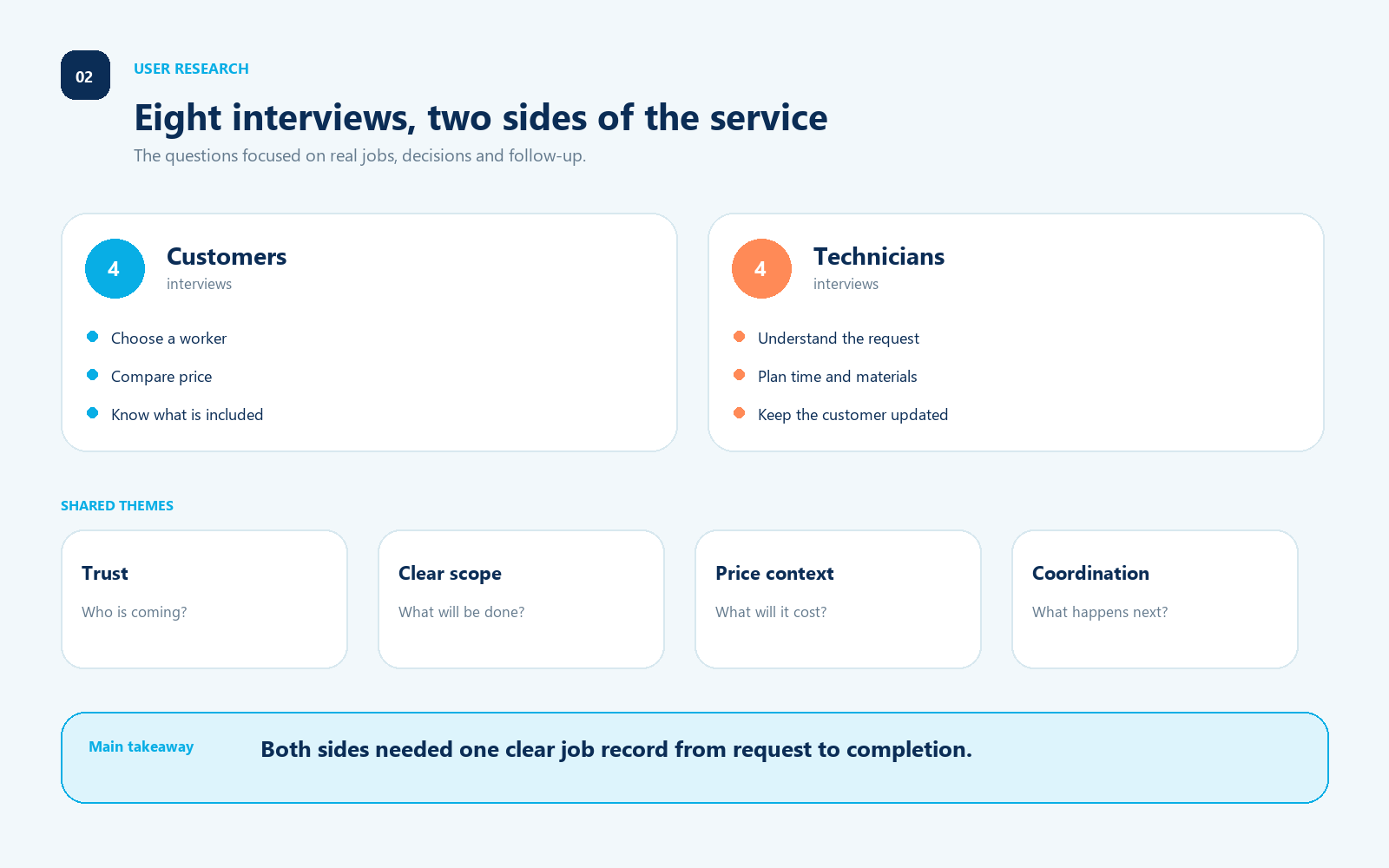
I interviewed eight people across customers and technicians. I asked about recent maintenance jobs, how people choose a worker, compare price, check skills and handle problems after handover. The same themes appeared on both sides: trust, clear scope, timing and follow-up.
04 / Experience architecture
One journey.
From search to completion.
How can customers choose the right technician and manage the job with less uncertainty?
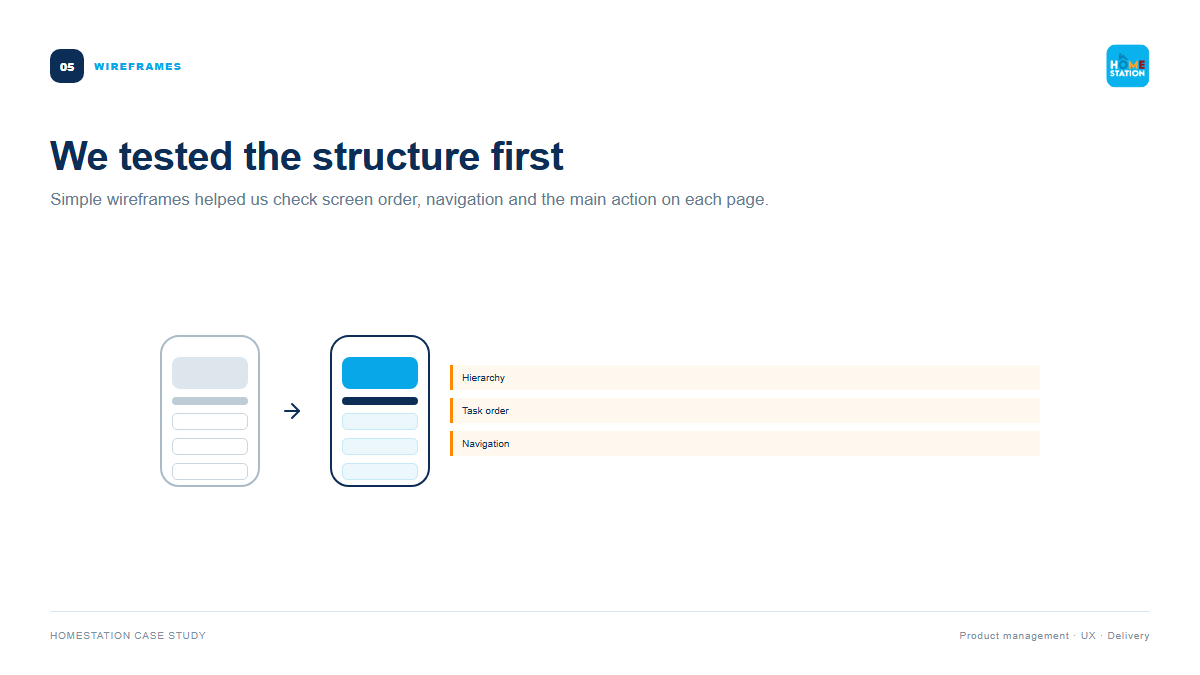
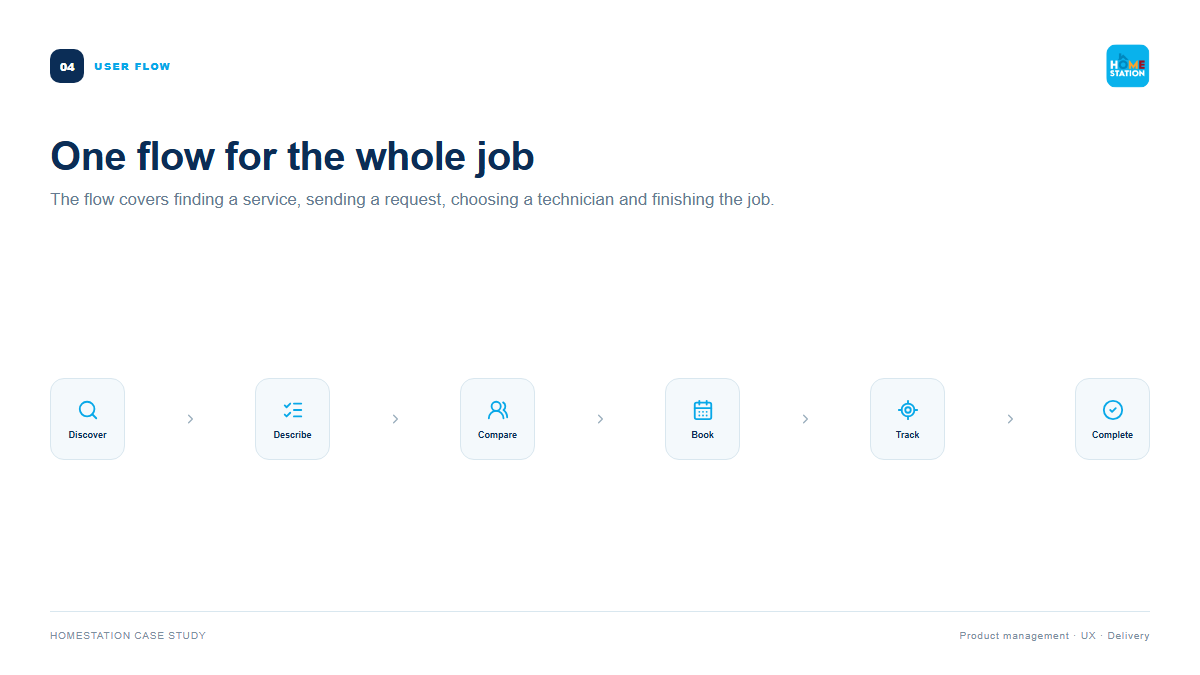
The product follows the job from the first search to the final rating. Each step gives customers and technicians the information they need next.
- Discover a service
- Compare technicians
- Describe the job
- Confirm the request
- Coordinate the visit
- Complete and rate
05 / Arabic product interface
Clear decisions.
At every stage.
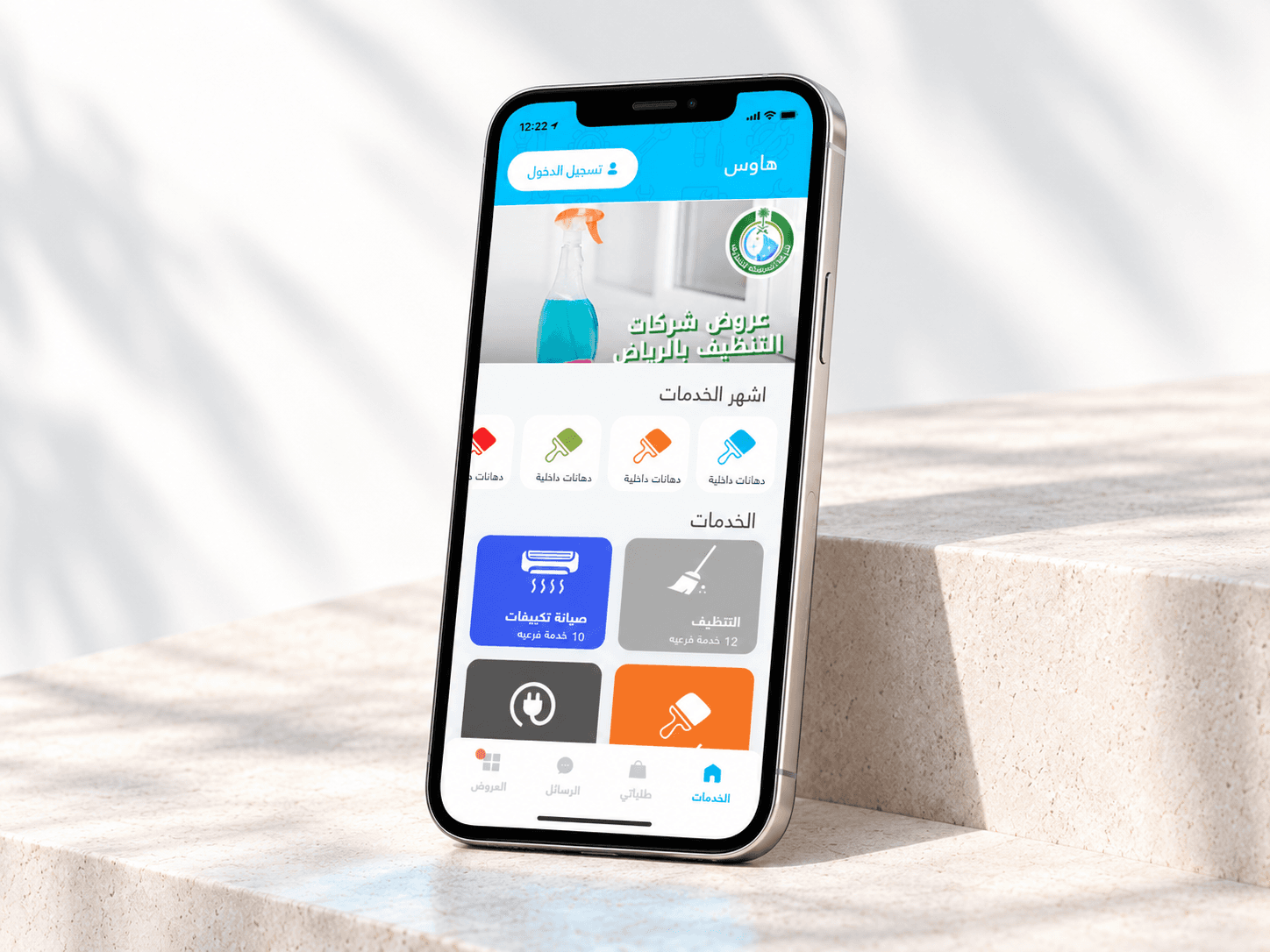
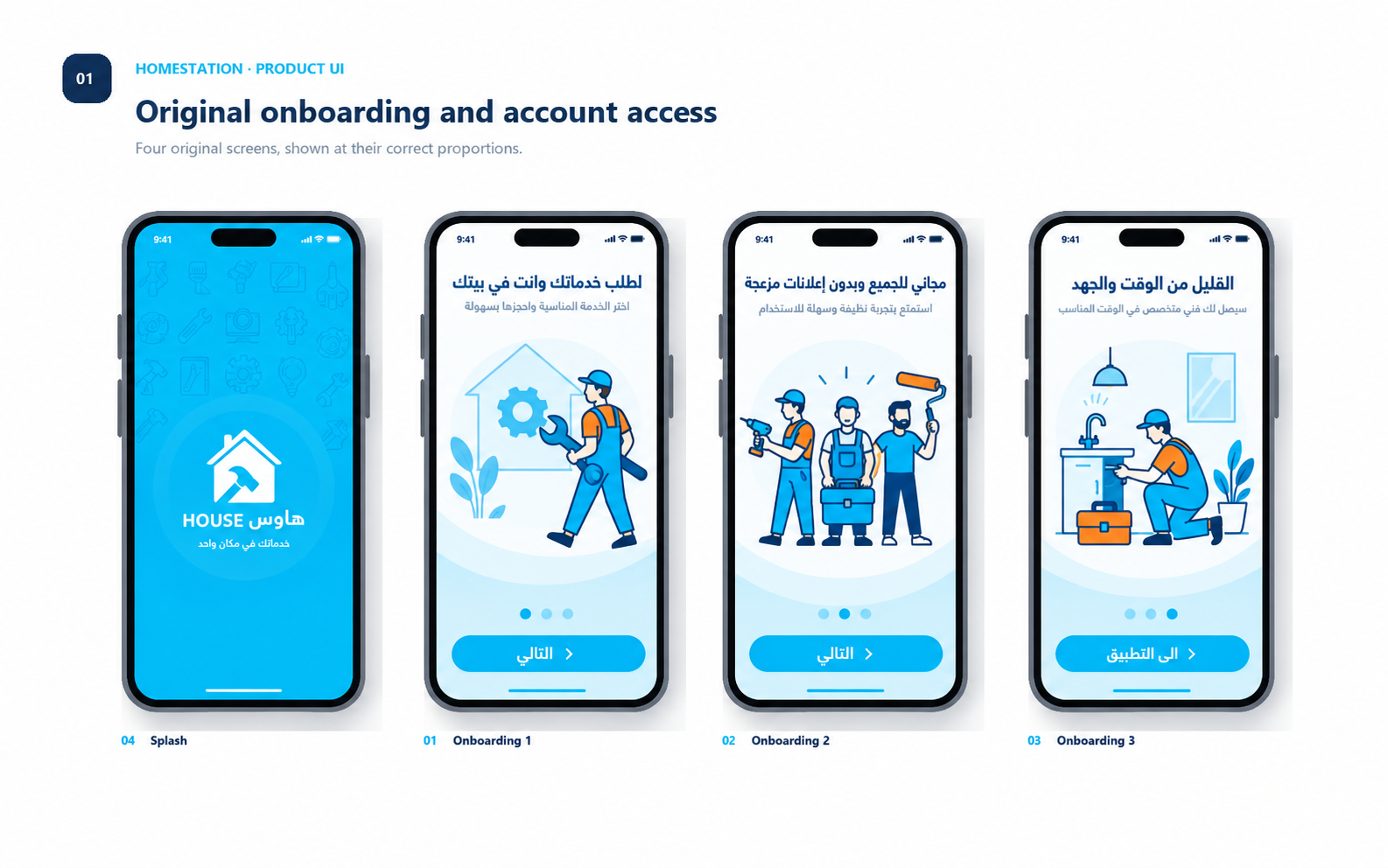
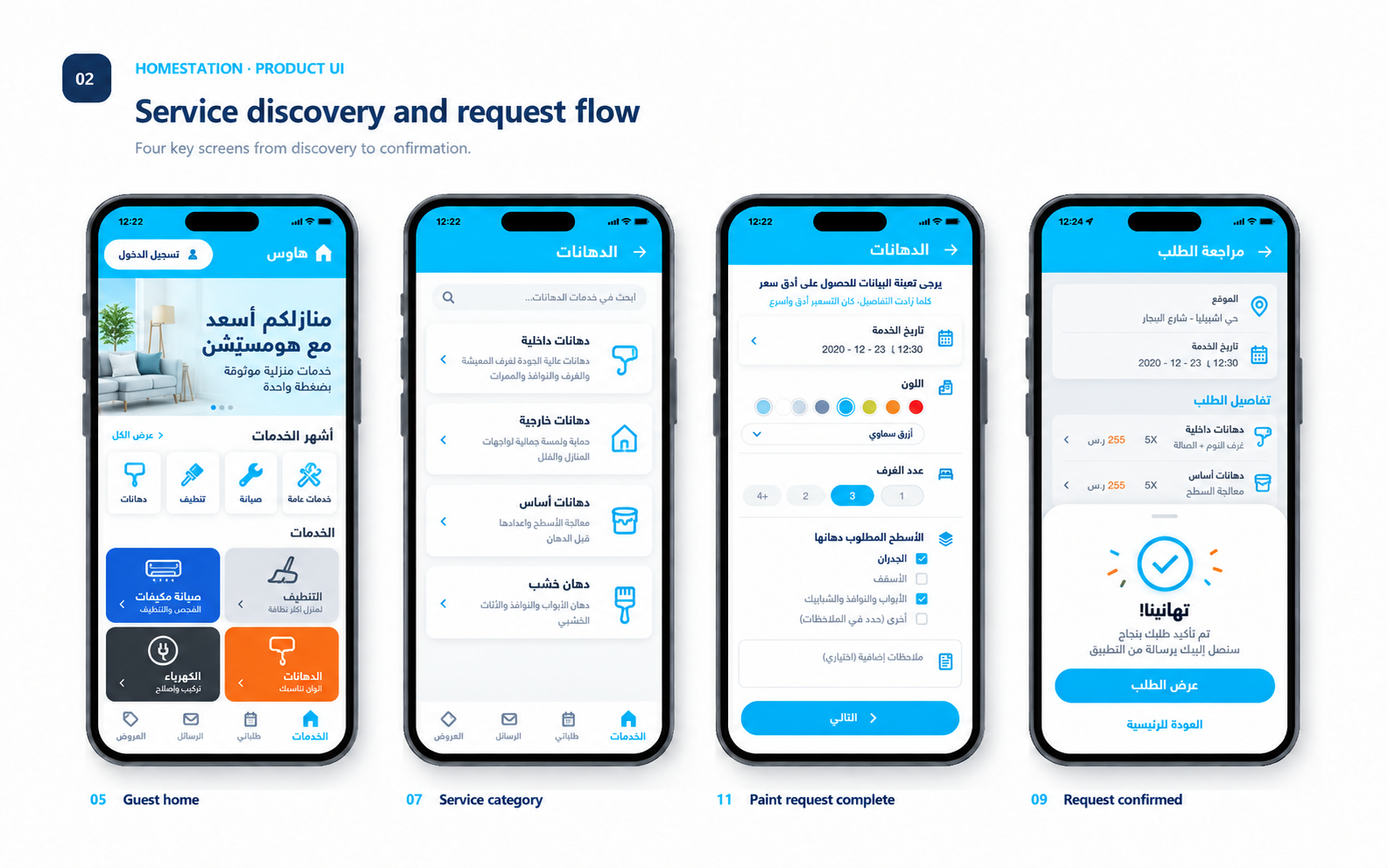
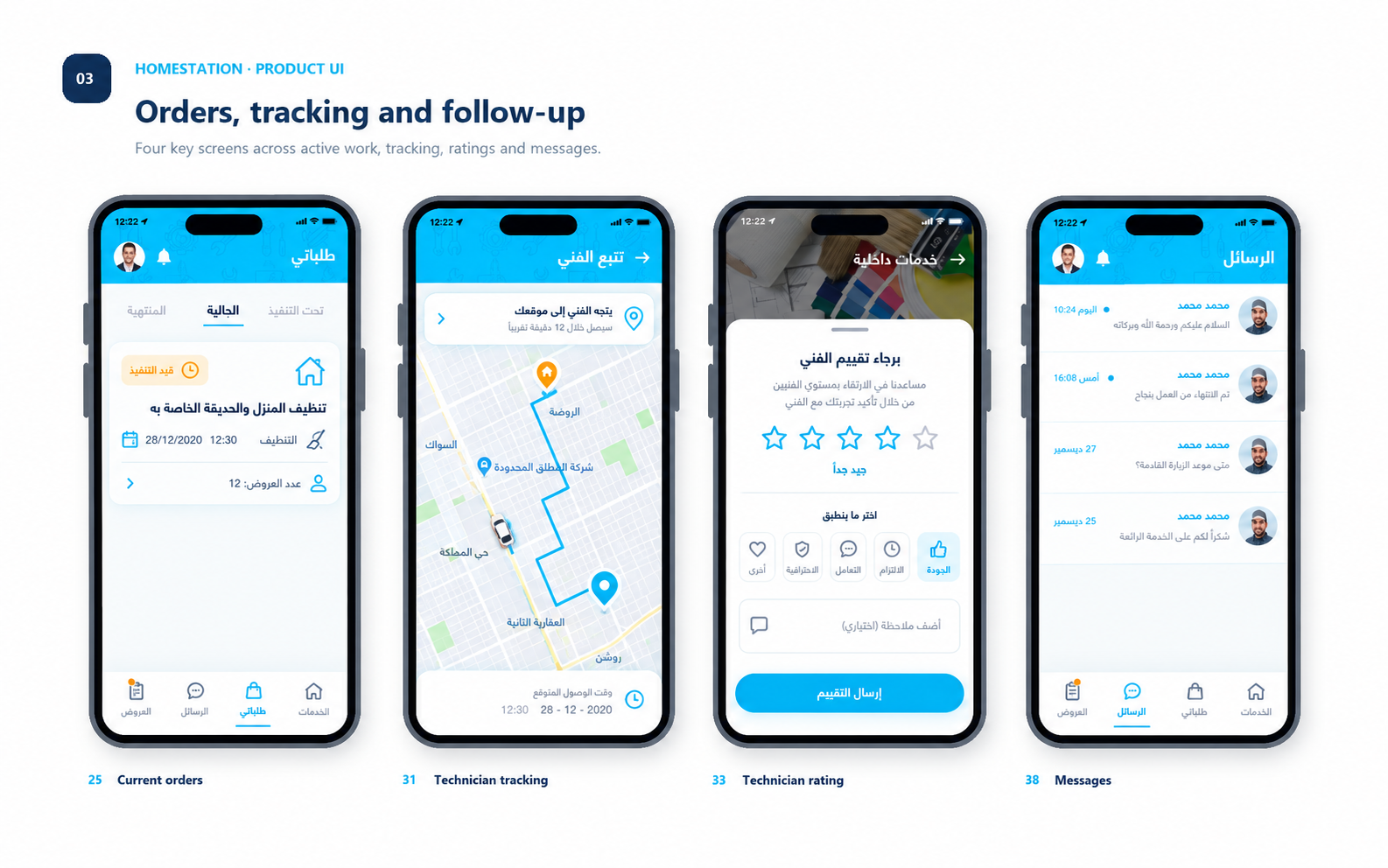
The shipped screens show a consistent Arabic-first layout, service cues and request states across discovery, booking and follow-up.
Arabic-first hierarchy
Labels, navigation and primary actions follow the right-to-left reading flow.
Recognisable service cues
Service icons and clear action styling help people scan categories and decide what to do next.
Status in context
Request, order and message screens keep the current job stage visible.
06 / Delivery & launch
Design it. Test it.
Stay through delivery.
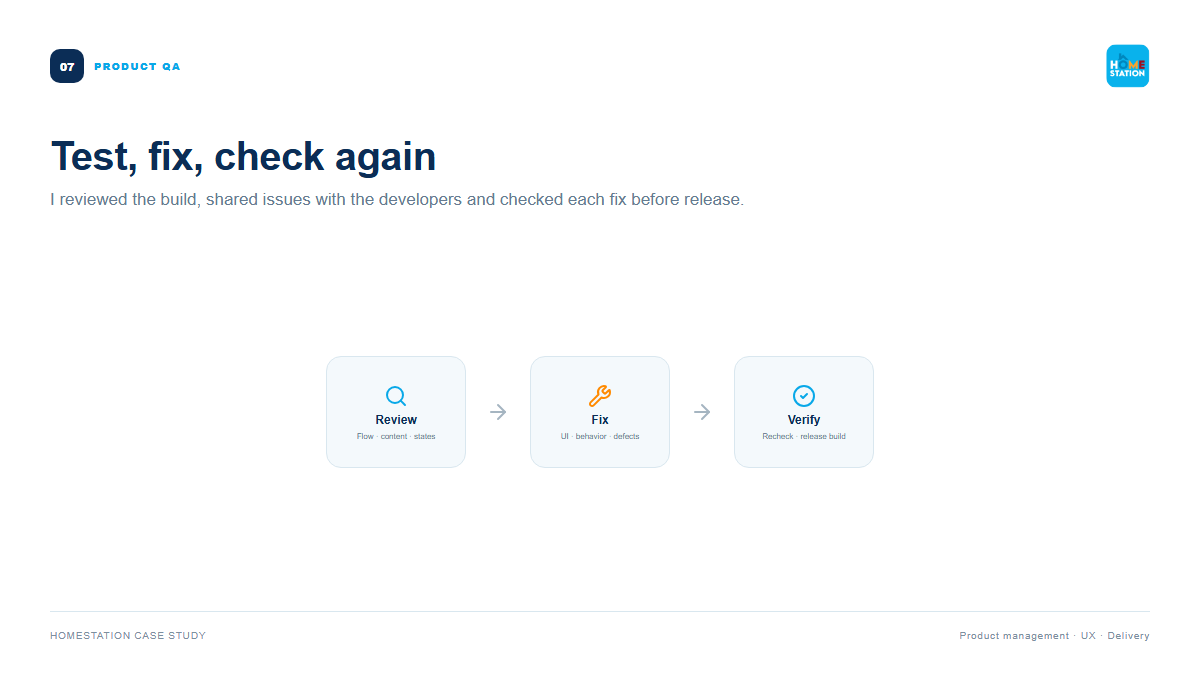
I tested the main tasks and reviewed the developers’ work. I shared issues with the team, checked the fixes and prepared the release build.
- Test key flows
- Review the build
- Record issues
- Work through fixes
- Recheck the experience
- Prepare the release